the Concorde’s story began in 1956. On November 5th of that year the Supersonic Transport Aircraft Committee (STAC) was founded to study the feasibility of building a supersonic airliner. It wasn’t until 1959 that they recommended design studies for 2 supersonic airliners.
The first discussions between The British Aircraft Corporation and Sud Aviation of France took place in 1961. In September 1962 French President Charles de Gaulle made a plea for cooperation as the building of a supersonic aircraft would be too costly for either country to finance alone.
The British Minister of Aviation and the French ambassador signed a preliminary agreement for cooperation. The treaty stated that Britain and France would share equally in both the costs of production and the profits from future sales. Four companies would get the contracts for work on the SST. The British Aircraft Corporation and Sud Aviation would build the airframe. Bristol Siddeley (Britain) and SNECMA (France) would manufacture the Olympus 593 jet engines.
In 1964, a management group was organized between the two governments. BAC (England) and Aerospatiale (France) would build the airframe, and Rolls Royce and SNECMA (France) would make the jet engines. These companies signed hundreds of contracts with suppliers from Britain, France and the USA. A “mini concord” made its first experimental flight in France on May 1. The spelling became the French “Concorde”, with Britain saying that the “e” stood for England, Europe and Excellence. This was a government financed and managed program.
In September 1965, work began on the production airframe. Final assembly of the British prototype began in 1966. The following year the first prototype was presented in Toulouse, France. In 1968 the first supersonic airliner to fly was not British of French. The Tupolev Tu-144 took off from a runway near where it was built, in Zhukovski, USSR. The French and British were painstakingly building, rebuilding and testing theirs. Funding was a hot electoral issue in England and was halted for a few months by the new Labor government.
On March 2nd 1969, The French Concorde 001 made its first take off run and on April 9th, the 002 in England first flew. Both aircraft were displayed at the Paris Air Show that year. By October the French model had made 45 test flights, reaching a speed of Mach 1 on October 1. In February 1970 the Olympus 593 engine made a test run and ran continuously for 300 hours, the equivalent of 100 Trans-Atlantic SST flights. Residents of London voiced the first complaints about noise in September when Concorde 002 landed at Heathrow airport.
The first pre-production aircraft rolled out of the hangar at Filton, England on the 20th of September 1971. In December the US Federal Aviation Agency (FAA) announced that Concorde was within American airport noise limits. The next year the British Concorde made a 45,000-mile sales tour of twelve countries and China indicated her intention to purchase two of them. BOAC of England ordered five and Air France requisitioned four. The jet had yet to be proved but intense testing and re-design was ongoing.
In June 1973 the Soviet Tupolev Tu-144, at the Paris Air Show, crashed killing 14 people, 6 aboard the aircraft and 8 on the ground. The pilot of the Tu-144 appeared to maneuver in order to avoid hitting a Mirage jet, lost a wing and broke apart. The first production model of the Concorde 201 made a flight in France and reached a speed of Mach 1.57.
In a contest reminiscent of the old horse vs. car days, the French Concorde was pitted against a 747 in 1974. The conventional 747 left Boston’s Logan Airport en route to Paris at the same time as the Concorde left Paris’ Orly for Boston. The Concorde landed in Paris, spent 68 minutes on the ground, and returned to Boston 11 minutes ahead of the 747. The production and testing of the SST was exceedingly costly for France and England. Because the companies were government financed it was a political issue too. A decision was made by Harold Wilson and Valery Giscard d'Estaing to continue the program but limit production to 16 aircraft. All of the US airline companies that had originally expressed interest in purchasing the Concorde had decided not to.
In 1975 the fourth production type aircraft Concorde 204 made two return flights from London to Gander, Newfoundland in a single day. British Airways and Air France started taking reservations for scheduled service to Bahrain and Rio de Janeiro starting the following January. By the 21st of January 1977 the Concorde had been in service for one year and had carried over 45,000 paying passengers. On the 50th anniversary of Charles Lindbergh's flight in the 'Spirit of St Louis' from New York to Paris, a Concorde flew the same route in 3 hours 44 minutes. Lindbergh's time was 33 hours 29 minutes. In April 1979 the last production Concorde 216 was completed.
By 1982 the Concorde had been in service for 6 years and The British Industry and Trade Committee was concerned with the mounting costs of the Concorde program. The British government informed British Airways that they were no longer willing to fund manufacturers Rolls Royce and British Aerospace. British Airways responded that they would investigate the possibility of running the program for profit. On January 1, 1983 the Concorde made the fastest ever time from New York to London at 2 hrs. 56 min. In 1984 British Airways took over responsibility for funding Concorde's British manufacturers.
Aside from a few rudder problems and cracked external windows in the early 1990’s the Concorde proved to be the most reliable airliner ever put into service. Cracks were discovered in the wings of a few planes in July 2000 but the cracks were deemed not critical. On July 25th, 2000 Air France Concorde F-BTSC crashed in Paris killing all 109 passengers and crew and 4 on the ground.
The Concorde:
Cruising speed: Mach 2 (twice the speed of sound)
Cruising altitude: 15,000-18,000 meters (50,000-60,000 ft.)
Takeoff speed: 360 km/h (223 mph)
Landing speed: 300 km/h (186 mph)
Runway length required for takeoff: 3,590 meters (11778.2 ft.)
Acceleration on takeoff: zero to 360 km/h in 20 seconds
Passenger capacity: 100
Overall length: 62 meters (203 ft.)
Maximum takeoff weight: 185,000 kilograms (84,000 lbs.)
Engines: Four, with 17,000 kilograms thrust each
Fuel capacity: 94,800 kilograms
Range: 6,545 kilometers (4,058 miles)
Round-trip fare: New York-Paris: $US 8,720
Flight time: New York-Paris: three hours 35 minutes
Sources:
Vancouver Sun, November 22 1997
http://www.concordesst.com/history.html
http://www.nmsi.ac.uk/on-line/flight/flight/concorde.htm - Science Museum-London


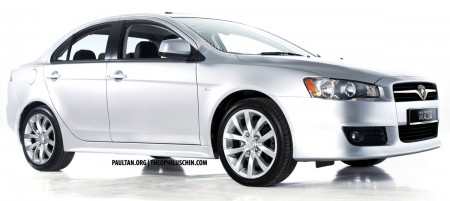


 And here’s a closer look at the mysterious new prototype. Is this the upcoming Persona replacement model built on a variant of the Exora platform (and disguised with Exora sheetmetal) with a multi-link suspension instead of the Exora’s torsion beam?


